|
You are here:
Top Sights in Lucca >
Via Fillungo
in Lucca
|
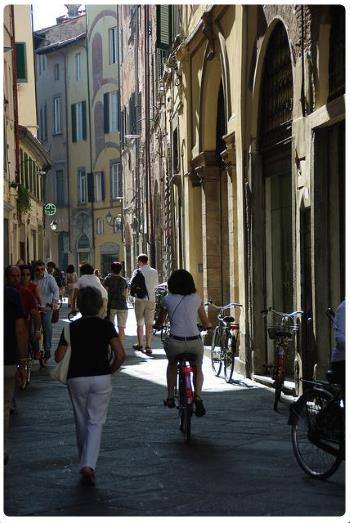
Via Fillungo
is an elegant shopping street in Lucca about
700 meters long, one of the most picturesque. Along
its path of about 700 meters meet in particular the
Church of San Cristoforo, the twelfth
century, deconsecrated and now used for various city
exhibitions, and the
Civic Tower of the Hours (Clock
Tower), which we have written in these pages, the
thirteenth century, once belonged to the most
powerful families of the city (the Quarters, the
Diverse, the Christophanes, the Sesmondi and
Chickpeas).
|
|
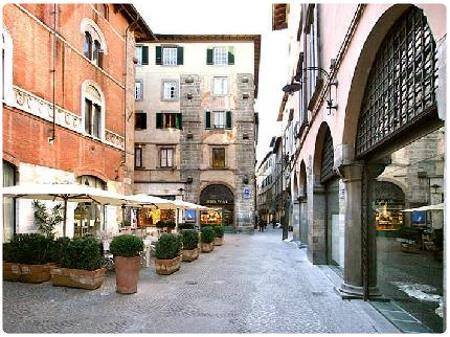 It
is believed that the name Fillungo derives from Fillongo
of Garfagnana, a fief originally belonging to the
Falabrina family, who owned some properties in the
street. From here, continuing, you can also reach Piazza
Anfiteatro (the famous round square on your right),
Piazza San Frediano (just before the amphitheater on the
left side with the beautiful mosaic outside and Piazza
dei Mercanti (where there was the oldest theater in
Lucca, later become Cinema Pantera). It
is believed that the name Fillungo derives from Fillongo
of Garfagnana, a fief originally belonging to the
Falabrina family, who owned some properties in the
street. From here, continuing, you can also reach Piazza
Anfiteatro (the famous round square on your right),
Piazza San Frediano (just before the amphitheater on the
left side with the beautiful mosaic outside and Piazza
dei Mercanti (where there was the oldest theater in
Lucca, later become Cinema Pantera).
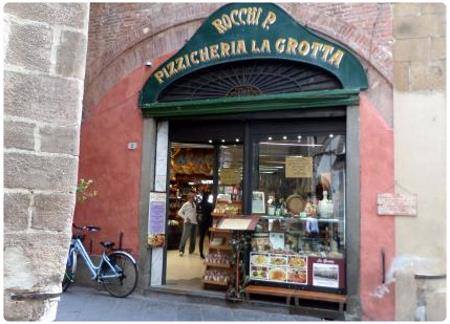 Via
Fillungo is the most important transversal axis of the city
having always connected the oldest nucleus, of Roman origin,
to the area of the Villages, outside the walls. For a long
time it was an obligatory stop for the pilgrims who passed
through the Via Francigena, and they already stopped then in
the commercial activities on the road and in the "hospices"
of the pilgrims. Today it is the preferred route of the
Lucchesi for the city walk and is the area of greatest
concentration of commercial activities. Its particular tone,
almost intimate, is given by a fluid course, "oscillating
ribbon", in which there are successive layers of
construction from the thirteenth century onwards, always
opposed with harmony and measure. On the street, which for
the most part preserves its original flooring with large
slabs of stone and elements of the ancient urban furniture,
there are churches and numerous palaces: among them, we
point out the Palazzo Buonvisi, now home to the Art
School. Via
Fillungo is the most important transversal axis of the city
having always connected the oldest nucleus, of Roman origin,
to the area of the Villages, outside the walls. For a long
time it was an obligatory stop for the pilgrims who passed
through the Via Francigena, and they already stopped then in
the commercial activities on the road and in the "hospices"
of the pilgrims. Today it is the preferred route of the
Lucchesi for the city walk and is the area of greatest
concentration of commercial activities. Its particular tone,
almost intimate, is given by a fluid course, "oscillating
ribbon", in which there are successive layers of
construction from the thirteenth century onwards, always
opposed with harmony and measure. On the street, which for
the most part preserves its original flooring with large
slabs of stone and elements of the ancient urban furniture,
there are churches and numerous palaces: among them, we
point out the Palazzo Buonvisi, now home to the Art
School.
 But
the particular character of the Fillungo is given above all
by the liveliness of the shops that overlook it, a true
integral part of the architectural and urban structure of
the street: among them many still preserve exhibitions and
interiors typically nineteenth century, as was the today
(unfortunately) closed old Cafe Caselli, then Di
Simo, which had among its customers like the poet
Giovanni Pascoli and the opera composer Giacomo
Puccini, while others maintain delicious signs liberty.
Wide stretches of blocks have, then, totally medieval
characteristics, such as that of a real insula of the court
of Snow, where they are also preserved-rare overhanging
spurs and wooden structures typical of the medieval urban
landscape. But
the particular character of the Fillungo is given above all
by the liveliness of the shops that overlook it, a true
integral part of the architectural and urban structure of
the street: among them many still preserve exhibitions and
interiors typically nineteenth century, as was the today
(unfortunately) closed old Cafe Caselli, then Di
Simo, which had among its customers like the poet
Giovanni Pascoli and the opera composer Giacomo
Puccini, while others maintain delicious signs liberty.
Wide stretches of blocks have, then, totally medieval
characteristics, such as that of a real insula of the court
of Snow, where they are also preserved-rare overhanging
spurs and wooden structures typical of the medieval urban
landscape.
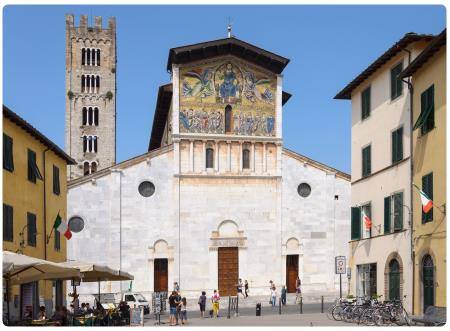 The
walking route along these streets will make you discover many
monuments, but also beautiful shops, cafes and chocolatiers
where you can stop for a purchase or a break refreshment. Along
the way there are many historic shops, which have more than a
century of life, with fine wooden windows, in particular, at
number 69 the shop of Francesco Lenci, at 83 the
Perfumery Ristori, at 95 the jewelry Carli, jewelers from
the late 1600s. Although there are very beautiful shops in all
parts of the center, Via Fillungo is certainly the essence of
the shoppin glucchese, the ancient vein of the city. At the end
of "al Fillungo", as they say around here, is the Basilica of
San Frediano, the Romanesque basilica with the gigantic and rare
mosaic of the thirteenth century on the facade, oriented in an
unnatural, almost scenic. Symbol from the 13th to the 17th
century of the cultured and updated merchant elite, the basilica
bears the signs of this in the works of art commissioned from
prestigious foreign artists, such as the chapel frescoed at the
beginning of the 16th century by the Bolognese Amico
Aspertini, works from the painter Francia and
sculptures by
Jacopo della Quercia. To learn more about
San Frediano read on to the following article:
Church
of San Frediano. The
walking route along these streets will make you discover many
monuments, but also beautiful shops, cafes and chocolatiers
where you can stop for a purchase or a break refreshment. Along
the way there are many historic shops, which have more than a
century of life, with fine wooden windows, in particular, at
number 69 the shop of Francesco Lenci, at 83 the
Perfumery Ristori, at 95 the jewelry Carli, jewelers from
the late 1600s. Although there are very beautiful shops in all
parts of the center, Via Fillungo is certainly the essence of
the shoppin glucchese, the ancient vein of the city. At the end
of "al Fillungo", as they say around here, is the Basilica of
San Frediano, the Romanesque basilica with the gigantic and rare
mosaic of the thirteenth century on the facade, oriented in an
unnatural, almost scenic. Symbol from the 13th to the 17th
century of the cultured and updated merchant elite, the basilica
bears the signs of this in the works of art commissioned from
prestigious foreign artists, such as the chapel frescoed at the
beginning of the 16th century by the Bolognese Amico
Aspertini, works from the painter Francia and
sculptures by
Jacopo della Quercia. To learn more about
San Frediano read on to the following article:
Church
of San Frediano.
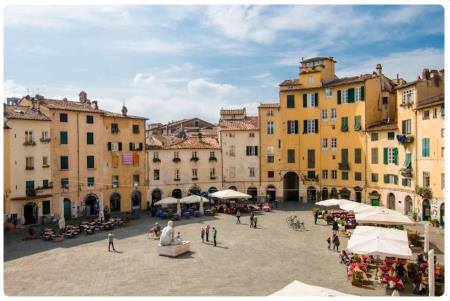 After
walking along Via Fillungo coming from Via Roma, on the
right you can see the archway leading to the Piazza
dell'Anfiteatro. The large arch leads directly to the
large elliptical space of the square, surrounded by cafes
and shops. The name derives from its location: in fact here
stood a large Roman amphitheater of the first century
AD. In the Middle Ages, a series of buildings were built on
top of the remains of the previous structure, which ended up
drawing the contours. The amphitheatre was destroyed during
the barbarian invasions and was used as a quarry of raw
materials necessary for the construction of churches and
city palaces. The floor of the original amphitheater is
located about 3 meters deep than the current floor. After
walking along Via Fillungo coming from Via Roma, on the
right you can see the archway leading to the Piazza
dell'Anfiteatro. The large arch leads directly to the
large elliptical space of the square, surrounded by cafes
and shops. The name derives from its location: in fact here
stood a large Roman amphitheater of the first century
AD. In the Middle Ages, a series of buildings were built on
top of the remains of the previous structure, which ended up
drawing the contours. The amphitheatre was destroyed during
the barbarian invasions and was used as a quarry of raw
materials necessary for the construction of churches and
city palaces. The floor of the original amphitheater is
located about 3 meters deep than the current floor.
Copyright ©
Informagiovani-italia.com
If you liked this guide and want to help Informagiovani-italia.com help
us to spread it.
Where is this place?
Top
Ostelli Lucca
Ostelli Italia
Auberges de Jeunesse Italie
Hotel Lucca
Carte Lucques
Karte von Lucca
Mapa Lucca
Map of Lucca
Carte de
la Toscane Karte
von Toskana Mapa
Toscana Map of
Tuscany
Carte d'Italie
Karte von Italien
Mapa Italia
Map of Italy |