|
|
What to see
in Siena - 20 places not to be missed
|
When we
think of the city of Siena, the first thing
that comes to mind, instinctively is its Palio, the
whole world knows the
Palio of Siena, but this ancient city
hides many other wonders, due to its history, to
what it has represented over the years, to the role
that the city has had for the development of Tuscany.
Let's discover its treasures together now.
|
|
Piazza del Campo
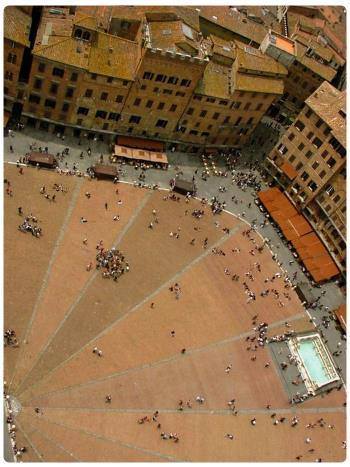 Visiting
Siena, a must-see stop is the visit to Piazza del Campo; this square,
in fact, both by tourists and inhabitants, is considered one of the symbolic
places of Tuscany. What is most striking about this square is its particular
shape, in fact it resembles a shell with nine segments,
slightly sloping. The number of these segments is not random, but brings
back the memory to the government of the Nine, a government that has
remained in the history of the city. This shape is clearly visible on the
top of the Mangia Tower (Torre del Mangia). This place has represented and
represents the fulcrum of city life: here, in fact, the market was
held, politics was discussed, danced during the feasts, today there are
events, celebrations and the famous Palio... Read on
Piazza del
Campo. Visiting
Siena, a must-see stop is the visit to Piazza del Campo; this square,
in fact, both by tourists and inhabitants, is considered one of the symbolic
places of Tuscany. What is most striking about this square is its particular
shape, in fact it resembles a shell with nine segments,
slightly sloping. The number of these segments is not random, but brings
back the memory to the government of the Nine, a government that has
remained in the history of the city. This shape is clearly visible on the
top of the Mangia Tower (Torre del Mangia). This place has represented and
represents the fulcrum of city life: here, in fact, the market was
held, politics was discussed, danced during the feasts, today there are
events, celebrations and the famous Palio... Read on
Piazza del
Campo.
Top
Palazzo Pubblico
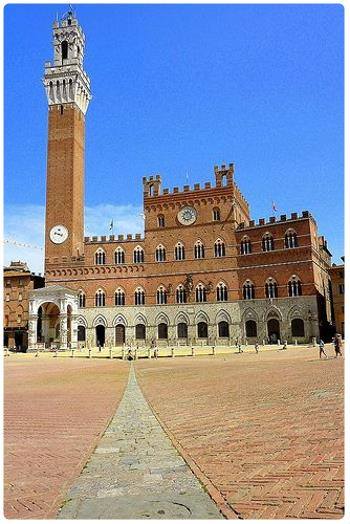 The
Palazzo Pubblico in Siena is one of the main palaces of the city, built
between 1288 and 1342 in the prevailing Gothic style of the time. The
Palazzo Pubblico has always hosted the city government, it was the
seat of the Government of the Nine, the famous government that in
1300 radically changed the appearance of the city. It was precisely these
nine regents who designed and built it, making it last until the present
day. When the city government issued an ordinance, for which, on Piazza del
Campo, only palaces could be built that had the same style as the Palazzo
Pubblico and none of them had to exceed the size of this place. Today the
palace is home to the municipal administration and the Civic
Museum. Absolutely to admire is the Salone del Gran Consiglio and the
arches that support the entire lower floor of the palace. These are
particular arches, typical of Siena, that are embellished by an ogiva....
Continue reading
Palazzo Pubblico. The
Palazzo Pubblico in Siena is one of the main palaces of the city, built
between 1288 and 1342 in the prevailing Gothic style of the time. The
Palazzo Pubblico has always hosted the city government, it was the
seat of the Government of the Nine, the famous government that in
1300 radically changed the appearance of the city. It was precisely these
nine regents who designed and built it, making it last until the present
day. When the city government issued an ordinance, for which, on Piazza del
Campo, only palaces could be built that had the same style as the Palazzo
Pubblico and none of them had to exceed the size of this place. Today the
palace is home to the municipal administration and the Civic
Museum. Absolutely to admire is the Salone del Gran Consiglio and the
arches that support the entire lower floor of the palace. These are
particular arches, typical of Siena, that are embellished by an ogiva....
Continue reading
Palazzo Pubblico.
Top
Museo Civico (City Museum)
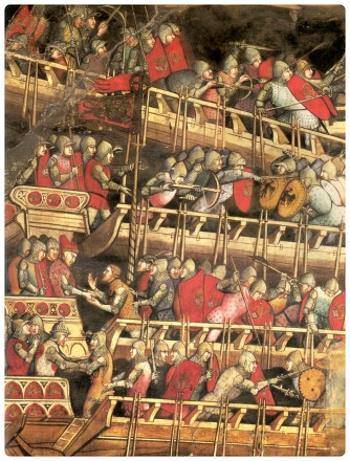 In
the Palazzo Pubblico is located the Civic Museum of
Siena, a series of rooms that house some treasures of art
heritage not only in the city but throughout Italy. This
museum is accessed from the courtyard of the palace through an
iron staircase. This museum was built in 1930 and is
located on the first floor of the building. It is divided into
several rooms, here you can admire works of art, which start in
1500 and come, for the most part from the Sienese territory. In
the Sala del Risorgimento it is possible to admire
various works, dating back to 1800, made by Gaetano Marinelli,
Alessandro Franchi, Arnoldo Prunai, just to name a
few. Also in this room you can admire the splendid sculptures of
Giovanni Dupré, real masterpieces. Read more about the
Civic Museum of Siena. In
the Palazzo Pubblico is located the Civic Museum of
Siena, a series of rooms that house some treasures of art
heritage not only in the city but throughout Italy. This
museum is accessed from the courtyard of the palace through an
iron staircase. This museum was built in 1930 and is
located on the first floor of the building. It is divided into
several rooms, here you can admire works of art, which start in
1500 and come, for the most part from the Sienese territory. In
the Sala del Risorgimento it is possible to admire
various works, dating back to 1800, made by Gaetano Marinelli,
Alessandro Franchi, Arnoldo Prunai, just to name a
few. Also in this room you can admire the splendid sculptures of
Giovanni Dupré, real masterpieces. Read more about the
Civic Museum of Siena.
Top
Torre del Mangia
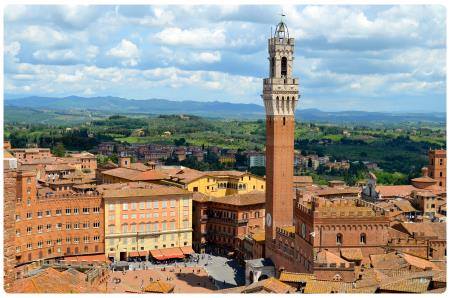 Do you like
the landscapes, views and breathtaking views of the
cities you visit? Then you can't really help but
visit the Torre del Mangia di Siena, a
structure 88 meters high, from the top of
which you can admire the Cathedral, Piazza del
Campo, the entire city and the hills
that surround it. The name of this tower
derives from its first guardian, Mr.
Giovanni di Duccio, who amuses himself to waste
the money he earned in the city's taverns....
Read more about
Torre del
Mangia. Do you like
the landscapes, views and breathtaking views of the
cities you visit? Then you can't really help but
visit the Torre del Mangia di Siena, a
structure 88 meters high, from the top of
which you can admire the Cathedral, Piazza del
Campo, the entire city and the hills
that surround it. The name of this tower
derives from its first guardian, Mr.
Giovanni di Duccio, who amuses himself to waste
the money he earned in the city's taverns....
Read more about
Torre del
Mangia.
Top
Cathedral of Siena
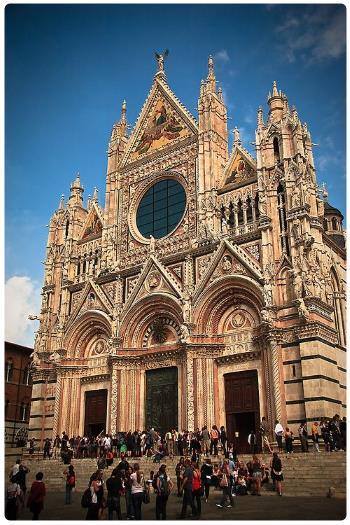 If
the Palazzo Pubblico is the masterpiece of Siena's civil
architecture, the cathedral is for the religious one. The city's most
illustrious visitors look at one and the other with astonished admiration:
and, for the Duomo, it is enough to remember, among the many prestigious
names, those of Taine, Ruskin and Wagner. The Duomo or
Cathedral of Siena is dedicated to Santa Maria Assunta and was built
in Romanesque-Gothic style. We don't know exactly when this church was
built, what is certain is that in 1226 there was a record of the expenses
for its construction. It is very likely that, in the place where the Duomo
stands today, once there was a pagan temple dedicated to the goddess
Minerva, which was later transformed into a religious building. Tradition
has it that the consecration of the cathedral took place on 18 November 1179
and that it was consecrated by Pope Alexander III himself... It
continues to read on the
Cathedral of
Siena. If
the Palazzo Pubblico is the masterpiece of Siena's civil
architecture, the cathedral is for the religious one. The city's most
illustrious visitors look at one and the other with astonished admiration:
and, for the Duomo, it is enough to remember, among the many prestigious
names, those of Taine, Ruskin and Wagner. The Duomo or
Cathedral of Siena is dedicated to Santa Maria Assunta and was built
in Romanesque-Gothic style. We don't know exactly when this church was
built, what is certain is that in 1226 there was a record of the expenses
for its construction. It is very likely that, in the place where the Duomo
stands today, once there was a pagan temple dedicated to the goddess
Minerva, which was later transformed into a religious building. Tradition
has it that the consecration of the cathedral took place on 18 November 1179
and that it was consecrated by Pope Alexander III himself... It
continues to read on the
Cathedral of
Siena.
Top
Museum of the Catedral of Siena
 From
the right side of the Cathedral you can visit the Museo dell'Opera del
Duomo (Museum of the Catedral of Siena), inside which are preserved all
the relics that come from the Cathedral and the Diocese of Siena. In this
museum are collected some of the masterpieces of art, not only Sienese, but
also Italian, just think that in this place you can admire the Tondo
that depicts the Madonna and Child of Donatello, works by
Jacopo della Quercia and the Nativity of the Virgin, by Pietro
Lorenzetti. The Museum is also called "Opera della Metropolitana di
Siena" and the same was already operational in 1180 for this reason is one
of the oldest private museums in our country. In the lower part it is
possible to admire the collection of statues, many of which were made by
Giovanni Pisano. On the first floor you can admire the altarpiece of the
Majesty of Duccio di Buoninsegna, dating back to the
fourteenth century. Continuing the path you can admire several wooden works,
until you reach the Sala del Tesoro, here are exhibited all the works of
sacred liturgy, among which stands out the Golden Rose, work of Gian
Lorenzo Bernini that Pope Alexander VII gave to the Dome in 1658. From
the right side of the Cathedral you can visit the Museo dell'Opera del
Duomo (Museum of the Catedral of Siena), inside which are preserved all
the relics that come from the Cathedral and the Diocese of Siena. In this
museum are collected some of the masterpieces of art, not only Sienese, but
also Italian, just think that in this place you can admire the Tondo
that depicts the Madonna and Child of Donatello, works by
Jacopo della Quercia and the Nativity of the Virgin, by Pietro
Lorenzetti. The Museum is also called "Opera della Metropolitana di
Siena" and the same was already operational in 1180 for this reason is one
of the oldest private museums in our country. In the lower part it is
possible to admire the collection of statues, many of which were made by
Giovanni Pisano. On the first floor you can admire the altarpiece of the
Majesty of Duccio di Buoninsegna, dating back to the
fourteenth century. Continuing the path you can admire several wooden works,
until you reach the Sala del Tesoro, here are exhibited all the works of
sacred liturgy, among which stands out the Golden Rose, work of Gian
Lorenzo Bernini that Pope Alexander VII gave to the Dome in 1658.
Top
Baptistery of Siena
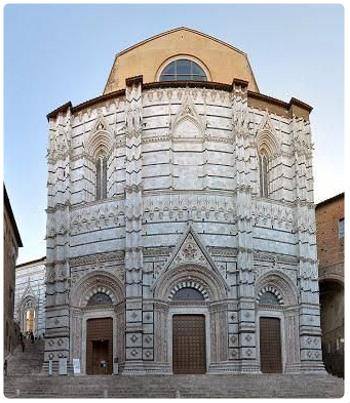 The
Baptistery of Siena is located near the Cathedral and has always
represented a historical place of the city, this is the place where children
were baptized and it is the same place where some of the Sienese who made
the history of Italy have been baptized. The baptistery is divided into
three naves, entirely frescoed. Among the many frescos there are those that
depict the Miracles of St. Anthony of Padua by Benvenuto di
Giovanni, those that depict the Lavender of the Feet by Pietro
degli Orioli and those by Lorenzo di Pietro. The real treasure of
this place is the Baptismal Fountain, which is located right in the centre,
entirely made of bronze and marble. This work of art, for its realization,
has seen the collaboration of many artists including Donatello,
Ghiberti and Jacopo della Quercia. The
Baptistery of Siena is located near the Cathedral and has always
represented a historical place of the city, this is the place where children
were baptized and it is the same place where some of the Sienese who made
the history of Italy have been baptized. The baptistery is divided into
three naves, entirely frescoed. Among the many frescos there are those that
depict the Miracles of St. Anthony of Padua by Benvenuto di
Giovanni, those that depict the Lavender of the Feet by Pietro
degli Orioli and those by Lorenzo di Pietro. The real treasure of
this place is the Baptismal Fountain, which is located right in the centre,
entirely made of bronze and marble. This work of art, for its realization,
has seen the collaboration of many artists including Donatello,
Ghiberti and Jacopo della Quercia.
Top
Palio of Siena
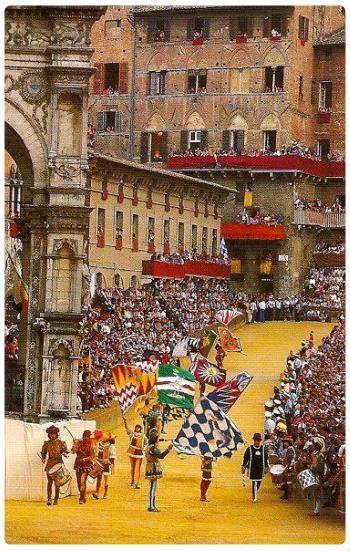 One
of the many reasons why Siena is known worldwide is its Palio. The
Palio di Siena is a historic competition, which runs with horses and
which reproposes the medieval visitation of costumes and which takes place
here twice a year. It was precisely this timeless magic that was created in
Siena during the Palio that made it become the most important historical
event in our country. The Palio was re-proposed in Siena since 1644
as an event that takes place between the different districts in the city.
Initially only the Palio di Provenzano was organized, which takes
place on July 2, the district that won this Palio then could organize that
of the Assumption, which took place on August 16. If the contrada
decided not to organize it, only the one of July 2 took place. For this
reason, since 1802 both the Palio di Provenzano and the Palio
dell'Assunta have been organized by the Municipality since 1802, in
order to guarantee their development. The Palio is attended by 10 districts
of the city (in total there are 17) 7 of these districts participate by
right, while the other three are extracted a few days before the festival.
The costumes, as well as the horses belong to every quarter and all the
patrimony is kept inside a church and includes relics, drapes, costumes,
flags and any other object that succeeds in reviving the history of the
district... Continue to read on the
Palio
of Siena. One
of the many reasons why Siena is known worldwide is its Palio. The
Palio di Siena is a historic competition, which runs with horses and
which reproposes the medieval visitation of costumes and which takes place
here twice a year. It was precisely this timeless magic that was created in
Siena during the Palio that made it become the most important historical
event in our country. The Palio was re-proposed in Siena since 1644
as an event that takes place between the different districts in the city.
Initially only the Palio di Provenzano was organized, which takes
place on July 2, the district that won this Palio then could organize that
of the Assumption, which took place on August 16. If the contrada
decided not to organize it, only the one of July 2 took place. For this
reason, since 1802 both the Palio di Provenzano and the Palio
dell'Assunta have been organized by the Municipality since 1802, in
order to guarantee their development. The Palio is attended by 10 districts
of the city (in total there are 17) 7 of these districts participate by
right, while the other three are extracted a few days before the festival.
The costumes, as well as the horses belong to every quarter and all the
patrimony is kept inside a church and includes relics, drapes, costumes,
flags and any other object that succeeds in reviving the history of the
district... Continue to read on the
Palio
of Siena.
Top
Pinacoteca di Siena
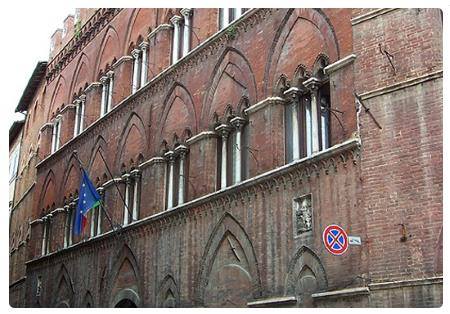 The
Pinacoteca Nazionale di Siena is one of the most important art galleries
in Italy. Here are preserved several masterpieces, in particular made
between the fifteenth and sixteenth centuries, mostly coming from the great
Sienese school, such as the large altarpieces with gold background. The
artists proposed in almost complete chronological order include city masters
or those who have worked in Siena such as: Duccio di Buoninsegna,
Piero and Ambrogio Lorenzetti, Simone Martini, Stefano di
Giovanni di Consolo called the Sassetta (from Cortona),
Francesco di Giorgio, Matteo di Giovanni up to Giovanni
Antonio Bazzi called the Sodoma and Domenico Beccafumi...
Continue reading on the
Pinacoteca di Siena. The
Pinacoteca Nazionale di Siena is one of the most important art galleries
in Italy. Here are preserved several masterpieces, in particular made
between the fifteenth and sixteenth centuries, mostly coming from the great
Sienese school, such as the large altarpieces with gold background. The
artists proposed in almost complete chronological order include city masters
or those who have worked in Siena such as: Duccio di Buoninsegna,
Piero and Ambrogio Lorenzetti, Simone Martini, Stefano di
Giovanni di Consolo called the Sassetta (from Cortona),
Francesco di Giorgio, Matteo di Giovanni up to Giovanni
Antonio Bazzi called the Sodoma and Domenico Beccafumi...
Continue reading on the
Pinacoteca di Siena.
Top
Museum Complex of Santa
Maria della Scala
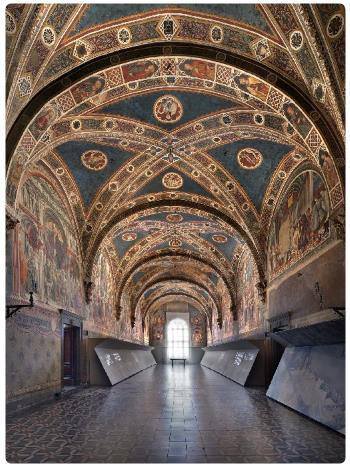 The
Museum Complex of Santa Maria della Scala is one of the oldest
hospitals in Europe. In fact, it is located along the route of the
Via Francigena and today it has become a museum complex. The structure
was born to provide care and shelter for pilgrims and to protect children
who were abandoned. Inside, in fact, there are several museums and a lot of
museum spaces, there are 4 exhibition levels, for this region has
become one of the cultural hubs of the city of Siena. At level 4 we find the
Pellegrinaio entirely frescoed with episodes that trace the history of the
hospital. Also here there is the Church of Santissima Annunziata, the Old
Sacristy, the Chapel of the Madonna, the Chapel of the Manto and the
Squarcialupi Palace. On the third level you can admire the Corticella where
you can admire the original casts of Fonte Gaia. The second level is not
open to the public. Level 1 is the Archaeological Museum. Inside this
cultural centre, moreover, various exhibitions and conferences are organized
and it is possible to visit the Centre of Contemporary Art, the Brigands'
Photo Library, the Library and the Museum of Art for Children, which is able
to understand how important it is to grow up in such a stimulating
environment. The
Museum Complex of Santa Maria della Scala is one of the oldest
hospitals in Europe. In fact, it is located along the route of the
Via Francigena and today it has become a museum complex. The structure
was born to provide care and shelter for pilgrims and to protect children
who were abandoned. Inside, in fact, there are several museums and a lot of
museum spaces, there are 4 exhibition levels, for this region has
become one of the cultural hubs of the city of Siena. At level 4 we find the
Pellegrinaio entirely frescoed with episodes that trace the history of the
hospital. Also here there is the Church of Santissima Annunziata, the Old
Sacristy, the Chapel of the Madonna, the Chapel of the Manto and the
Squarcialupi Palace. On the third level you can admire the Corticella where
you can admire the original casts of Fonte Gaia. The second level is not
open to the public. Level 1 is the Archaeological Museum. Inside this
cultural centre, moreover, various exhibitions and conferences are organized
and it is possible to visit the Centre of Contemporary Art, the Brigands'
Photo Library, the Library and the Museum of Art for Children, which is able
to understand how important it is to grow up in such a stimulating
environment.
Top
Church of Sant'Agostino
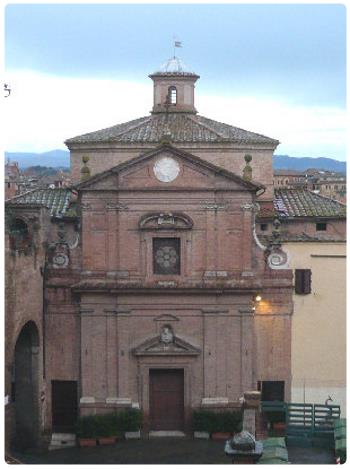 The
Church of Sant' Agostino is located on the hill of Sant'Agata, in
Siena, at the end of Via San Pietro in front of a square called "Prato di
Sant' Agostino". The church, which has among other things the splendid
altarpiece with the Crucifixion of Perugino, is the place
where Jacopo della Quercia is buried. It was built in 1258, although
over the years it was considerably modified, in particular it was almost
rebuilt after a fire in 1747 and in 1819 when the external portico was added
to the structure. In 1755 the great architect of the Royal Palace of
Caserta (among other things) Luigi Vanvitelli, took charge of
reconstructing it.... He continues to read on the
Church of Sant' Agostino. The
Church of Sant' Agostino is located on the hill of Sant'Agata, in
Siena, at the end of Via San Pietro in front of a square called "Prato di
Sant' Agostino". The church, which has among other things the splendid
altarpiece with the Crucifixion of Perugino, is the place
where Jacopo della Quercia is buried. It was built in 1258, although
over the years it was considerably modified, in particular it was almost
rebuilt after a fire in 1747 and in 1819 when the external portico was added
to the structure. In 1755 the great architect of the Royal Palace of
Caserta (among other things) Luigi Vanvitelli, took charge of
reconstructing it.... He continues to read on the
Church of Sant' Agostino.
Top
Basilica of San Domenico
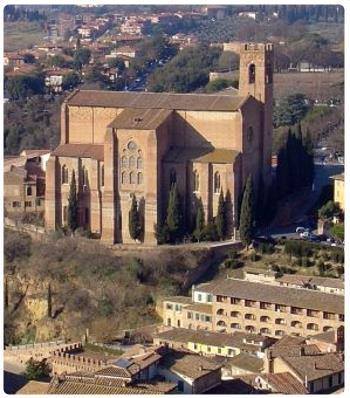 The
Basilica of San Domenico in Siena is one of the most important and
ancient churches of the city of Siena, it was built in 1200 and inside it is
possible to admire the relic of the head of St. Catherine of Siena.
The church was built by the Dominicans in 1226 and was modified over
the years. Since 1925 the church has been called Basilica Minore. The
structure presents itself, in the complex in Cistencian Gothic style, with
different bricks, because beggars used poor materials for the construction
of their churches. The shape of the façade has no decorations and there is a
large central rose window. The bell tower dates back to 1340. The plan of
the church is very particular, it is in fact an Egyptian cross, with only
one nave surmounted by trusses. The nave is divided into two floors, in the
first floor there are several altars and in the second of the typically
Gothic windows with windows. The Chapel of Santa Caterina is located
on the right wall and it is here that we can admire the relic of the head of
the Saint, venerated all over the world. This chapel was built in 1466 to
house the relic. The head of Saint Catherine was separated from the rest of
the body and was taken to Siena in 1384 four years after her death. The
relic is kept inside an altar dating back to 1569. The chapel is entirely
decorated with frescoes, among which we can admire the Liberation of an
obsess by Saint Catherine, created by the Vanni. The
Basilica of San Domenico in Siena is one of the most important and
ancient churches of the city of Siena, it was built in 1200 and inside it is
possible to admire the relic of the head of St. Catherine of Siena.
The church was built by the Dominicans in 1226 and was modified over
the years. Since 1925 the church has been called Basilica Minore. The
structure presents itself, in the complex in Cistencian Gothic style, with
different bricks, because beggars used poor materials for the construction
of their churches. The shape of the façade has no decorations and there is a
large central rose window. The bell tower dates back to 1340. The plan of
the church is very particular, it is in fact an Egyptian cross, with only
one nave surmounted by trusses. The nave is divided into two floors, in the
first floor there are several altars and in the second of the typically
Gothic windows with windows. The Chapel of Santa Caterina is located
on the right wall and it is here that we can admire the relic of the head of
the Saint, venerated all over the world. This chapel was built in 1466 to
house the relic. The head of Saint Catherine was separated from the rest of
the body and was taken to Siena in 1384 four years after her death. The
relic is kept inside an altar dating back to 1569. The chapel is entirely
decorated with frescoes, among which we can admire the Liberation of an
obsess by Saint Catherine, created by the Vanni.
Top
Basilica of San Francesco
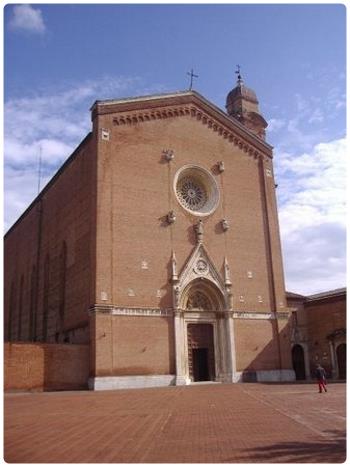 This
church was built in 1200 and is located in Piazza San Francesco. The
original structure was in Romanesque style, but over the years it was
remodelled and today takes on a typically Gothic connotation. This church
was built in 1228 by the Franciscans who arrived here after the death
of Saint Francis of Assisi. The Sienese are very devoted to this church also
because what went down in history here, such as the Miracle of Details,
happened. On August 14th, 1730, a pyx was stolen in this church, with 351
parapets inside, or consecrated hosts. On August 17, the particles were
found in an alms box, which was also full of dust. The details were brought
back to the church of San Francesco and the faithful asked that they be
preserved in order to adore them. Even today, after all this time, these
particles are still intact, on their surface there is no trace of mould or
decomposition, as the laws of nature require, but they are there, just as
they were in 1730 to testify that the Eucharist is the living miracle of
Jesus who gives himself to us. The basilica has an Egyptian cross structure
and a single nave. Very particular is the Cappella Maggiore with a
modern marble altar and a wonderful glass window, defined one of the most
beautiful modern windows. Inside this church, as well as in many other
churches of Siena there are the flags of all the districts of the city. This
church was built in 1200 and is located in Piazza San Francesco. The
original structure was in Romanesque style, but over the years it was
remodelled and today takes on a typically Gothic connotation. This church
was built in 1228 by the Franciscans who arrived here after the death
of Saint Francis of Assisi. The Sienese are very devoted to this church also
because what went down in history here, such as the Miracle of Details,
happened. On August 14th, 1730, a pyx was stolen in this church, with 351
parapets inside, or consecrated hosts. On August 17, the particles were
found in an alms box, which was also full of dust. The details were brought
back to the church of San Francesco and the faithful asked that they be
preserved in order to adore them. Even today, after all this time, these
particles are still intact, on their surface there is no trace of mould or
decomposition, as the laws of nature require, but they are there, just as
they were in 1730 to testify that the Eucharist is the living miracle of
Jesus who gives himself to us. The basilica has an Egyptian cross structure
and a single nave. Very particular is the Cappella Maggiore with a
modern marble altar and a wonderful glass window, defined one of the most
beautiful modern windows. Inside this church, as well as in many other
churches of Siena there are the flags of all the districts of the city.
Top
Basilica of San
Clemente in Santa Maria dei Servi
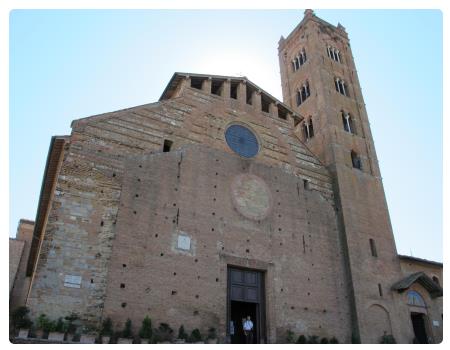 This
Basilica was erected by the order of the Serviti (Servants) who
arrived in the city in 1250. Initially the religious settled outside the
city centre, but the municipality invited them to build a church inside the
walls, in the same place where the church of San Clemente stood. The plan of
this church is an Egyptian cross and is divided into three naves, supported
by round arches. It is presented as a whole, in a typical Tuscan Renaissance
style. Inside you can admire several frescos, including that of Our Lady
who frees the souls of Purgatory, the painting of the Madonna del
Bordone by Coppo di Marcovaldo, the Nativity of Mary by
Manetti, the Madonna with the seven holy founders by Franchi, the
Annunciation by Vanni, the Painted Cross by Nerio,
the Madonna and Child by Bonaventura and Sant'Agnese by
Ambrogio Lorenzetti. This
Basilica was erected by the order of the Serviti (Servants) who
arrived in the city in 1250. Initially the religious settled outside the
city centre, but the municipality invited them to build a church inside the
walls, in the same place where the church of San Clemente stood. The plan of
this church is an Egyptian cross and is divided into three naves, supported
by round arches. It is presented as a whole, in a typical Tuscan Renaissance
style. Inside you can admire several frescos, including that of Our Lady
who frees the souls of Purgatory, the painting of the Madonna del
Bordone by Coppo di Marcovaldo, the Nativity of Mary by
Manetti, the Madonna with the seven holy founders by Franchi, the
Annunciation by Vanni, the Painted Cross by Nerio,
the Madonna and Child by Bonaventura and Sant'Agnese by
Ambrogio Lorenzetti.
Top
Church of San Giuseppe
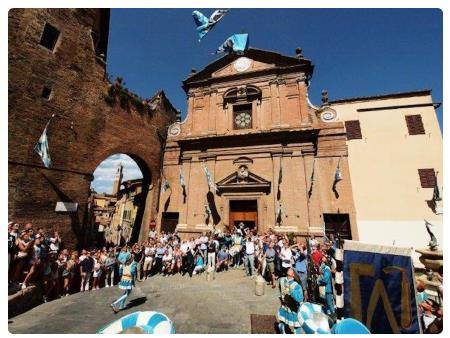 The
Church of San Giuseppe was built starting from 1522 at the behest of
the Woodworkers' Art who wanted to honor the patron Saint Joseph.
The plan is a Greek cross, its facade is entirely covered with bricks and
formed by two orders. Inside this church it is possible to admire numerous
works of art from 1600 to 1900. The dome is entirely frescoed with the
Genealogy of Saint Joseph of Apollonio Nasini. To admire the statue of St.
Joseph and the wooden crucifix, made during the Baroque period. The
Church of San Giuseppe was built starting from 1522 at the behest of
the Woodworkers' Art who wanted to honor the patron Saint Joseph.
The plan is a Greek cross, its facade is entirely covered with bricks and
formed by two orders. Inside this church it is possible to admire numerous
works of art from 1600 to 1900. The dome is entirely frescoed with the
Genealogy of Saint Joseph of Apollonio Nasini. To admire the statue of St.
Joseph and the wooden crucifix, made during the Baroque period.
Top
Piccolomini Palace
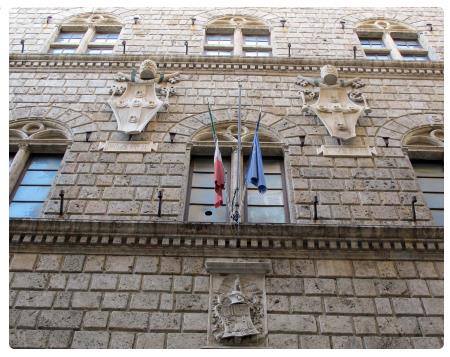 This
palace is the most beautiful Renaissance building in Siena.
Giacomo and Andrea Piccolomini made by the grandchildren of Pope Pius
II. It has a facade entirely made of stone where there are the two coats
of arms of the Piccolomini family. Since 1858, the State Archives
have housed 60,000 very valuable parchments and various state documents from
1100 to 1800. This
palace is the most beautiful Renaissance building in Siena.
Giacomo and Andrea Piccolomini made by the grandchildren of Pope Pius
II. It has a facade entirely made of stone where there are the two coats
of arms of the Piccolomini family. Since 1858, the State Archives
have housed 60,000 very valuable parchments and various state documents from
1100 to 1800.
Top
Teatro dei Rozzi
(Theatre of Rozzi)
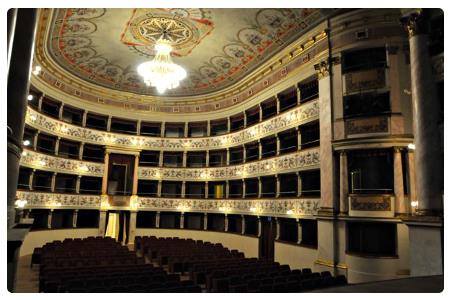 In
Siena, from 1531 the "congrega dei Rozzi" had been formed, a union of
craftsmen, who in 1690 became an Academy. The Academy's mission was
to preserve the popular art of the city. The Academy of Wells, in 1807,
conceived its own theatre and the work began 8 years later. The first opera
to be performed in this theatre was L'Agnese by Fitzenry by
Ferdinando Paer. Over the years it has been one of the key places for
Sienese culture, has been restored and since 29 May 1998 reopened to the
public. Inside it can accommodate 499 people and there are plays,
musical works and various cultural meetings. In
Siena, from 1531 the "congrega dei Rozzi" had been formed, a union of
craftsmen, who in 1690 became an Academy. The Academy's mission was
to preserve the popular art of the city. The Academy of Wells, in 1807,
conceived its own theatre and the work began 8 years later. The first opera
to be performed in this theatre was L'Agnese by Fitzenry by
Ferdinando Paer. Over the years it has been one of the key places for
Sienese culture, has been restored and since 29 May 1998 reopened to the
public. Inside it can accommodate 499 people and there are plays,
musical works and various cultural meetings.
Copyright © Informagiovani-italia.com
Where is it located?
Top
Ostelli Siena
Ostelli Italia
Auberges de Jeunesse Italie
Hotel Siena
Carte de Sienne
Karte von Siena
Mapa Siena
Map of Siena
Carte de
la Toscane Karte
von Toskana Mapa
Toscana Map of
Tuscany
Carte d'Italie
Karte von Italien
Mapa Italia
Map of Italy |