|
What to
see in Barcelona - The best 30 attractions not to miss
Barcelona looks like one one thousand
different cities, hard to distinguish one from another. Tidy and chaotic,
traditional and modern, never ordinary and a nicely elusive place. From the
characteristic medieval quarter, through the elegant Eixample from the 19th
century and the refurbished promenade, the city rewards the visitors with
streets full of charm, attractions and curious things. Barcelona is an ever
changing city which always keeps up with the times. What to see? A lot of
things. Where to look? Everywhere. What to do? Live the city like the locals
do, without forgetting its numerous attractions.
Let's find them out together... follow me!
Sagrada Familia
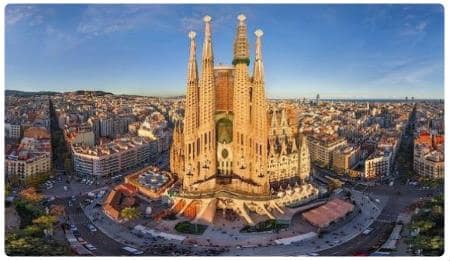 The
Sagrada Familia, the unfinished masterpiece of
Antoni Gaudì (but it will be lent), is
one of Barcelona's most popular tourist attractions, probably
the only one that alone, even if dear, is worth a visit to the
city. His Spanish-language name is Templo Expiatorio de la
Sagrada Familia. Main characteristic, in addition to the
aesthetic, is that of being still under construction:
incredible but true, but the works seem to continue at least
until 2026... and think that they began in 1882! Like the great
churches of the past, this one follows its path, in an
architecture that has now become synonymous with the same soul
of the city.... Read on the
Sagrada Familia. The
Sagrada Familia, the unfinished masterpiece of
Antoni Gaudì (but it will be lent), is
one of Barcelona's most popular tourist attractions, probably
the only one that alone, even if dear, is worth a visit to the
city. His Spanish-language name is Templo Expiatorio de la
Sagrada Familia. Main characteristic, in addition to the
aesthetic, is that of being still under construction:
incredible but true, but the works seem to continue at least
until 2026... and think that they began in 1882! Like the great
churches of the past, this one follows its path, in an
architecture that has now become synonymous with the same soul
of the city.... Read on the
Sagrada Familia.
Top
Las Ramblas
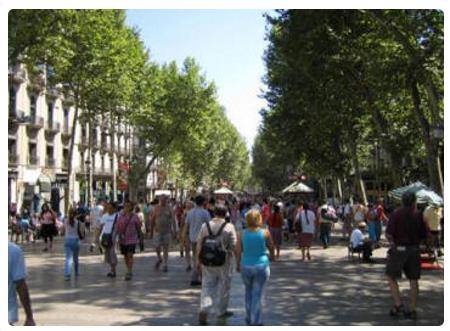 Las
Ramblas are a great and unique avenue, one of the most emblematic places in
the city of
Barcelona, which crosses it in its vital heart, connecting Plaça de
Catalunya to the north to the old port of Barcelona (Port Vell) in
the south, as far as the monument dedicated to Christopher Columbus. This
long avenue, originally bedded by a seasonal river, undisputed landmark of the
city life, has in its different features different names, such as Rambla de
Canaletes, Rambla dels Estudis, etc...Read on the
Las Ramblas. Las
Ramblas are a great and unique avenue, one of the most emblematic places in
the city of
Barcelona, which crosses it in its vital heart, connecting Plaça de
Catalunya to the north to the old port of Barcelona (Port Vell) in
the south, as far as the monument dedicated to Christopher Columbus. This
long avenue, originally bedded by a seasonal river, undisputed landmark of the
city life, has in its different features different names, such as Rambla de
Canaletes, Rambla dels Estudis, etc...Read on the
Las Ramblas.
Top
Casa Batlló
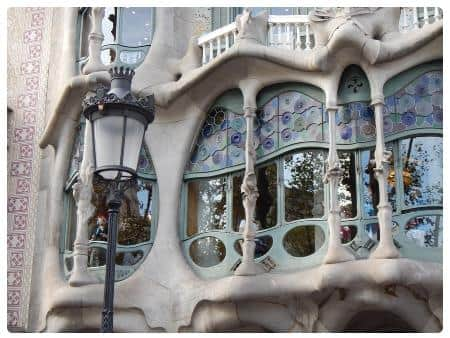 In the early 1900s,
Antoni Gaudì, the most famous
Barcelona architect and his collaborator
Josep Maria
Jujol, took charge of designing an ordinary block of apartments
belonging to the textile manufacturers magnate Josep Batlló. The
result was to create one of the greatest masterpieces in the
history of architecture. With its sensual wrought-iron curves
and the shimmering "trencadis" (collage of broken tiles and
ceramics) on the façade, it would seem that Casa Batlló
represents the legend of St. George (patron saint of
Catalonia) and his dragon....Read on the
Casa Batlló. In the early 1900s,
Antoni Gaudì, the most famous
Barcelona architect and his collaborator
Josep Maria
Jujol, took charge of designing an ordinary block of apartments
belonging to the textile manufacturers magnate Josep Batlló. The
result was to create one of the greatest masterpieces in the
history of architecture. With its sensual wrought-iron curves
and the shimmering "trencadis" (collage of broken tiles and
ceramics) on the façade, it would seem that Casa Batlló
represents the legend of St. George (patron saint of
Catalonia) and his dragon....Read on the
Casa Batlló.
Top
Finca Güell
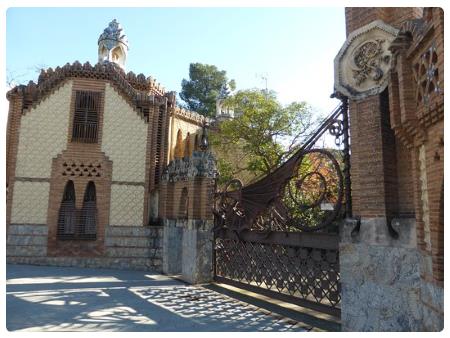 Fantasy
and technical innovation merge in the former warehouses of the
Finca Güell in Avinguda Pedralbes in Barcelona.
The beauty and colour of the buildings do not eclipse the main
protagonist of this particular union: the mythological giant
dragon of the Garden of the Hesperides (the mythological
garden where a tree of gold pomi trees grew), a synthesis of the
symbolism and craftsmanship of Gaudí...Read on the
Finca Güell. Fantasy
and technical innovation merge in the former warehouses of the
Finca Güell in Avinguda Pedralbes in Barcelona.
The beauty and colour of the buildings do not eclipse the main
protagonist of this particular union: the mythological giant
dragon of the Garden of the Hesperides (the mythological
garden where a tree of gold pomi trees grew), a synthesis of the
symbolism and craftsmanship of Gaudí...Read on the
Finca Güell.
Top
Ajuntament
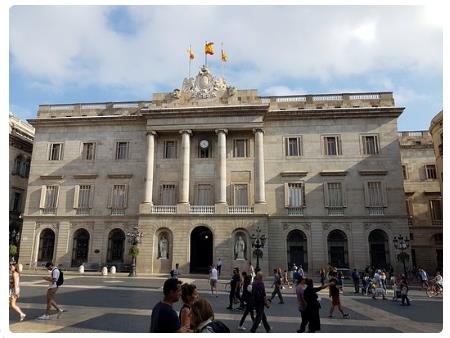 The
City Hall of Barcelona (Ajuntament) is an elegant building with a
beautiful 18th century façade and an ancient Gothic-Catalan entrance hall dating
back to the 15th century. Inside you can admire several works of art by the
great Catalan masters and in particular the famous Saló de Cent, where
the Council of the Hundred (Consell de Cent) used to meet during the
government of the city, from 1372 to 1714. The building of the Municipality of
Barcelona, also called Casa de la Ciutat is located in the Plaza de
Sant Jaume, one of the most central places in the city and therefore used by
tourists and citizens of Barcelona. Opposite there is another very significant
institutional building, the Palau de la Generalitat de Catalunya...Read
more on
Ajuntament City Hall of Barcelona. The
City Hall of Barcelona (Ajuntament) is an elegant building with a
beautiful 18th century façade and an ancient Gothic-Catalan entrance hall dating
back to the 15th century. Inside you can admire several works of art by the
great Catalan masters and in particular the famous Saló de Cent, where
the Council of the Hundred (Consell de Cent) used to meet during the
government of the city, from 1372 to 1714. The building of the Municipality of
Barcelona, also called Casa de la Ciutat is located in the Plaza de
Sant Jaume, one of the most central places in the city and therefore used by
tourists and citizens of Barcelona. Opposite there is another very significant
institutional building, the Palau de la Generalitat de Catalunya...Read
more on
Ajuntament City Hall of Barcelona.
Top
CaixaForum
Casaramona,
Marquès de Comillas avda 6-8
Quarter: Montjuic e Poble Sec
Metro: Espanya
Access: free
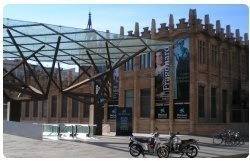 In 2011, the former textile factory (Casaramora) designed by Puig
i Cadafalch, masterpiece of the industrial modernism, has celebrated its
100 years of life. Don't miss one of the most interesting spaces of
contemporary art in town, both for its architecture and its content. It
hosts a permanent collection of contemporary art and three huge spaces for
temporary shows. The complex includes a large entrance designed by Arata
Isozaki, a mural by Sol LeWitt, an auditorium, a bookshop and a
library. In 2011, the former textile factory (Casaramora) designed by Puig
i Cadafalch, masterpiece of the industrial modernism, has celebrated its
100 years of life. Don't miss one of the most interesting spaces of
contemporary art in town, both for its architecture and its content. It
hosts a permanent collection of contemporary art and three huge spaces for
temporary shows. The complex includes a large entrance designed by Arata
Isozaki, a mural by Sol LeWitt, an auditorium, a bookshop and a
library.
Top
Casa
Amatller
Passeig de Gràcia 41
Quarter: Eixample
Metro: Passeig de Gràcia
Access: ticket fee
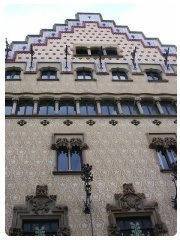 Don't miss a visit to this wonder of modernist architecture, built by baron
Amatller. He (1851-1910) belonged to an ancient family of chocolate makers
from Barcelona, whose activity started in 1797. Art and photography lover,
the baron commissioned the costruction of his residence between 1898 and
1900 to the famous architect Josep Puig i Cadafalch, one of the main
exponents of Catalan modernism. Together with Casa Batló and Casa
Lleó-Morera, it's considered one of the main buildings in the quarter
of Illa de la Discordia in Barcelona. Inspired by the style of Dutch
houses from the 17th century, the building has a characteristic Fleming
pediment covered with glossy ceramic, while the lower front and the portal
are decorated with sculptures by Eusebi Arnau i Mascort. The building
today hosts an art institute (Instituto Amatller de Arte Hispánico)
and is an archive for the vast collection of Amatller. The guided tour of
the house also includes Amatller's chocolate tasting. Don't miss a visit to this wonder of modernist architecture, built by baron
Amatller. He (1851-1910) belonged to an ancient family of chocolate makers
from Barcelona, whose activity started in 1797. Art and photography lover,
the baron commissioned the costruction of his residence between 1898 and
1900 to the famous architect Josep Puig i Cadafalch, one of the main
exponents of Catalan modernism. Together with Casa Batló and Casa
Lleó-Morera, it's considered one of the main buildings in the quarter
of Illa de la Discordia in Barcelona. Inspired by the style of Dutch
houses from the 17th century, the building has a characteristic Fleming
pediment covered with glossy ceramic, while the lower front and the portal
are decorated with sculptures by Eusebi Arnau i Mascort. The building
today hosts an art institute (Instituto Amatller de Arte Hispánico)
and is an archive for the vast collection of Amatller. The guided tour of
the house also includes Amatller's chocolate tasting.
Top
Casa
Àsia (Palau de Baró Quadras)
Avenida Diagonal 373
Quarter: Eixample
Entrance: free
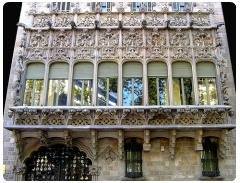 The Cultural centre for Asia and the Pacific is hosted in the adorned
Palau de Baró Quadras, a modernist building designed by Puig i Cadafalch in
1904. Besides somptuous sculptures and mosaics, you can admire a variety of
excellent temporary art shows, from modern art to Chinese abstractism, to
Iranian graphics. The aim of the cultural centre is to promote Asian culture
in Barcelona, with language courses, international conferences and cinema. The Cultural centre for Asia and the Pacific is hosted in the adorned
Palau de Baró Quadras, a modernist building designed by Puig i Cadafalch in
1904. Besides somptuous sculptures and mosaics, you can admire a variety of
excellent temporary art shows, from modern art to Chinese abstractism, to
Iranian graphics. The aim of the cultural centre is to promote Asian culture
in Barcelona, with language courses, international conferences and cinema.
Top
Casa
Vicens
Carrer de les Carolines
Quarter: Gracia
Metro: Fontana
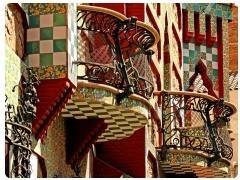 Casa Vicens is the first important building completed by Antoni Gaudi,
built between 1883 and 1888. You can only see it from outside, since it's
inhabited by the descendants of the tiles producer Manuel Vicens i
Montaner (in 2007 the house was sold for 27 millions euro). You can
admire the beauty of its external front, with its mosaic of colored tiles,
one of the first examples of Art Nouveau architecture in Barcelona and in
the entire Europe. The internal spaces include Ottoman, Islamic and
Andalusian influences; at that time Gaudí was deeply influenced by the
architecture of North Africa and the Middle East and this can be noticed
especially in the internal design of the house. Casa Vicens is the first important building completed by Antoni Gaudi,
built between 1883 and 1888. You can only see it from outside, since it's
inhabited by the descendants of the tiles producer Manuel Vicens i
Montaner (in 2007 the house was sold for 27 millions euro). You can
admire the beauty of its external front, with its mosaic of colored tiles,
one of the first examples of Art Nouveau architecture in Barcelona and in
the entire Europe. The internal spaces include Ottoman, Islamic and
Andalusian influences; at that time Gaudí was deeply influenced by the
architecture of North Africa and the Middle East and this can be noticed
especially in the internal design of the house.
Top
Casa
Lleó Morera
Passeig de Gràcia 35
Metro: L'Esquerra Eixample
Metro: Passeig de Gràcia
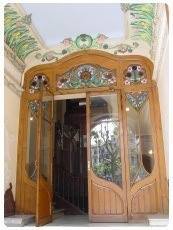 On the corner Carrer del Consell de Cent, there's Casa Lleó Morera, one of
the three houses on the famous street which were completed by Domènech i
Montaner in 1906. Art Nouveau style, the inside of the shop is the only
part of the building which is open to the public. On the corner Carrer del Consell de Cent, there's Casa Lleó Morera, one of
the three houses on the famous street which were completed by Domènech i
Montaner in 1906. Art Nouveau style, the inside of the shop is the only
part of the building which is open to the public.
Top
Chathedral
od Barcelona
Pla de la Seu
Quarter: Barrí Gòtic
Metro: Jaume I
 Access: free (except for museum and panoramic view) Access: free (except for museum and panoramic view)
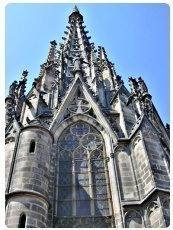
The cathedral of Barcelona (its official name is Catedral de la Santa
Creu i Santa Eulalia) is one of the main examples of gothic-catalan
architecture. Its spires are visible from almost everywhere in the Barrio
Gotico and the huge square where it's located, Plaça de la Seu,
is one of the most trafficked spots in the area. In the same position,
before the cathedral, there used to be a roman temple and, more recently, a
mosque. The construction started in 1298 and was completed in the 15th
century, but the front and the central spire were completed not earlier than
1913. You can admire the bright cloister enriched by a vault of grids in
wraught iron, embellished by orange trees, medlars and palms: plus, it hosts
13 white geese (as many as the years of Saint Eulalia's life). The Museum
of the Cathedral, in the capitular room of the 17th century, includes
paintings and sculptures by maestros of the Gothic style such as Jaume
Huguet, Bernat Martorell and Bartolomé Bermejo. During the
Corpus Domini festival (in June), the cloister of the cathedral presents a
typical catalan tradition from 1637, L'ou com balla (the dancing egg): a
shell of an empty egg is positioned on the upper part of the fountain that
pours water and is left there "
dancing" .
Top
CCCB
(Centre de Cultura Contemporanea de Barcelona)
C / Montalegre 5
Quarter: Barri Gòtic
Metro: Catalunya
Access: ticket fee
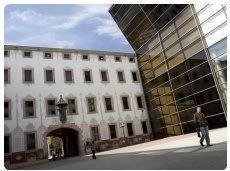 The biggest cultural centre in Spain was inaugurated in 1994 in the Casa
de la Caritat, a former hospice built in 1802 on the site of a medieval
monastery. The imposing front and part of the courtyard belong to the
original building, the rest was rebuilt in a dramatic contrast, all glass
and steel, by the architect Piñón Viaplana. The biggest cultural centre in Spain was inaugurated in 1994 in the Casa
de la Caritat, a former hospice built in 1802 on the site of a medieval
monastery. The imposing front and part of the courtyard belong to the
original building, the rest was rebuilt in a dramatic contrast, all glass
and steel, by the architect Piñón Viaplana.
Top
Cementeri
Sud-Oest
C / Mare de Déu de Port 54-58
Quarter: Montjuic and Poble Sec
Bus: n 38
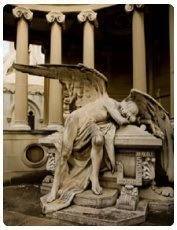 Designed by Leandro Albareda in 1880, the great cemetery was
originally divided into four sections: one for catholics, one for
protestants, one for non christians and the fourth for aborted fetuses. Now
it extends over the South-western corner of the mountain. Many graves,
especially those belonging to the gypsy community, are a blaze of colours
and flowers. Inside, you can also find the Fossar de la memoriale Pedrera,
remembering the fallen people from the International brigades and Catalan
martyrs of the civil war, Holocaust Memorial and a mausoleum for
the former president of the Generalitat, Lluís Companys. Designed by Leandro Albareda in 1880, the great cemetery was
originally divided into four sections: one for catholics, one for
protestants, one for non christians and the fourth for aborted fetuses. Now
it extends over the South-western corner of the mountain. Many graves,
especially those belonging to the gypsy community, are a blaze of colours
and flowers. Inside, you can also find the Fossar de la memoriale Pedrera,
remembering the fallen people from the International brigades and Catalan
martyrs of the civil war, Holocaust Memorial and a mausoleum for
the former president of the Generalitat, Lluís Companys.
Top
Colonia
Güell
Claudi Güell s/n
Santa Coloma de Cervello (outside Barcellona)
Transports: railway FGC for Güell Colonia. Lines S33, S34, S8, or S7 (from
Plaça Espanya)
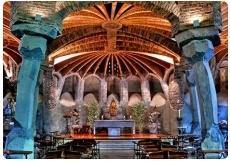 Eusebi Güell was a progressive man and he wanted to found a colony
for the workers of his textile factory. The colony would include a hospital,
a library, public residences, a theatre, a church and a crypt. Nowadays,
it's a village with 775 residents, located out of Barcelona, in the
Comarca of Baix Llobregat (municipality of Santa Coloma de Cervelló).
Its creator and designer once again was Antoni Gaudí, who started the
works in 1890, helped by collaborators such as architects Francesc
Berenguer and Joan Rubió Bellver. Most of the buildings are now
private residences, but others such as the factory and the warehouse have
been abandoned, and this gives to the area a ghost city atmosphere. Eusebi Güell was a progressive man and he wanted to found a colony
for the workers of his textile factory. The colony would include a hospital,
a library, public residences, a theatre, a church and a crypt. Nowadays,
it's a village with 775 residents, located out of Barcelona, in the
Comarca of Baix Llobregat (municipality of Santa Coloma de Cervelló).
Its creator and designer once again was Antoni Gaudí, who started the
works in 1890, helped by collaborators such as architects Francesc
Berenguer and Joan Rubió Bellver. Most of the buildings are now
private residences, but others such as the factory and the warehouse have
been abandoned, and this gives to the area a ghost city atmosphere.
Top
Museu
d'Historia de la Ciutat e
Palau Reial Major
Plaça del Rei s / n, Barri Gotic
Metro: Liceu o Jaume I
Accesss: ticket fee
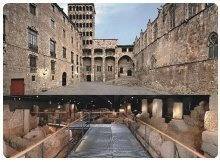 Two of the biggest museums in Barcelona are located in a square called
Plaça del Rei, situated near the borders of the remaining section of the
walls of the ancient town. Besides the expositions of Medieval Barcelona,
you should pay particular attention to the underground part, under the
square: the excavations brought back to light a huge section of Barcino,
the old roman city. An incredible ancient Barcelona emerges from the
ground: streets, squares, houses decorated with mosaics, shoops, the forum
and the wine warehouses. Two of the biggest museums in Barcelona are located in a square called
Plaça del Rei, situated near the borders of the remaining section of the
walls of the ancient town. Besides the expositions of Medieval Barcelona,
you should pay particular attention to the underground part, under the
square: the excavations brought back to light a huge section of Barcino,
the old roman city. An incredible ancient Barcelona emerges from the
ground: streets, squares, houses decorated with mosaics, shoops, the forum
and the wine warehouses.
Top
CosmoCaixa(Science Museum)
C/Teodor Roviralta 47-51,
Quarter: west
Transport: bus 17, 22, 58.
Railway FGC from Avenida Tibidabo, followed by Tramvia Blau
Access: ticket fee
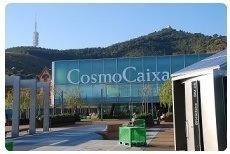 Financed by the bank La Caixa, the Museu de la Ciència closed
in 1998 for a huge renovation, for 6 years. These works contributed to
create one of the biggest and most beautiful science museums in Europe. Financed by the bank La Caixa, the Museu de la Ciència closed
in 1998 for a huge renovation, for 6 years. These works contributed to
create one of the biggest and most beautiful science museums in Europe.
Top
Palau
de la Música Catalana
C / Sant Francesc de Paula 2
Quarter: Pere Born & St
Metro: Urquinaona
Access: ticket fee
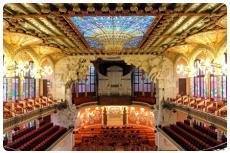 The Palau de la Música is, according to many people, the most relevant
contribution left by the Catalan modernist movement. Simply wonderful, it
was declared World Heritage by UNESCO in 1997. The palace of music was
designed by Lluís Domènech i Montaner, an architect who lived at the
same time as Gaudí. Commissioned by the National Choral Society Orfeo
Català, the building is richly decorated: the ceiling is an inverted
bell made of colored glass, representing the sun in a blue sky, formed by 18
semi-mosaics, with muses appearing as bas-relieves from the back of the
stage, winged horses fly over the superior balcony... Don't miss a visit to
this unique-in-the-world jewel. The Palau de la Música is, according to many people, the most relevant
contribution left by the Catalan modernist movement. Simply wonderful, it
was declared World Heritage by UNESCO in 1997. The palace of music was
designed by Lluís Domènech i Montaner, an architect who lived at the
same time as Gaudí. Commissioned by the National Choral Society Orfeo
Català, the building is richly decorated: the ceiling is an inverted
bell made of colored glass, representing the sun in a blue sky, formed by 18
semi-mosaics, with muses appearing as bas-relieves from the back of the
stage, winged horses fly over the superior balcony... Don't miss a visit to
this unique-in-the-world jewel.
Top
Funicolar
of Tibidabo
Plaça Doctor Andreu a Plaça Tibidabo
Quarter: west
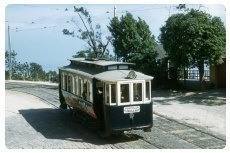 Transports: railway FGC Avenida Tibidabo then Tramvia Blau Transports: railway FGC Avenida Tibidabo then Tramvia Blau
Don't miss a ride on this art deco vehicle to admire part of the town
below, which winds through the pine woods to the top of the hill. It's been
operating since 1901, according to a complicated timetable. When it's not
operating, it's substituted by the line FGC from Plaça de Catalunya to Peu,
with the funicular to Vallvidrera Superior, where you can catch the 111 bus
to Tibidabo.
Top
Hospital
de la Santa Creu i Sant Pau
C/Sant Antoni María Claret 167
Quarter: Eixample
Metro: Hospital de Sant Pau
Accesso: ticket fee
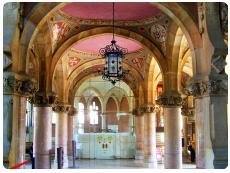 Domènech i Montaner built the hospital (1902-1911) by keeping
patiences in mind, as he was convinced that sick people's health could
profit from aesthetic harmony. One of the UNESCO World Heritages in
Barcelona, it's made of 20 pavilions, richly adorned with colored
byzantine, gothic and moorish influences, united by the architectural style
of the garden, which expands over 9 blocks in a North-Eastern corner of the
Eixample district. Hospital Sant Pau was commissioned by Pau Gil i Serra, a
rich Catalan banker who wanted to create a hospital based on the "
garden
town" of the model. Domènech i Montaner built the hospital (1902-1911) by keeping
patiences in mind, as he was convinced that sick people's health could
profit from aesthetic harmony. One of the UNESCO World Heritages in
Barcelona, it's made of 20 pavilions, richly adorned with colored
byzantine, gothic and moorish influences, united by the architectural style
of the garden, which expands over 9 blocks in a North-Eastern corner of the
Eixample district. Hospital Sant Pau was commissioned by Pau Gil i Serra, a
rich Catalan banker who wanted to create a hospital based on the "
garden
town" of the model.
Top
Passeig Picasso
Quarter: Born & St Pere
Metro: Arc de Triomf o Barceloneta
Accesso: free
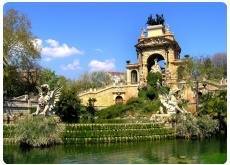 You can find a bit of everything in this huge and fascinating park: a zoo,
the Natural History museum, buildings of the Catalan Parliament, a school, a
church, a navigable lake, kiosks, families and young people having
pic-nics... the most classic park in Barcelona is also the richest in
history. Gaudí contributed to the construction of the Italian style
monumental fountain when he was still a student. Don't miss this park for a
little bit of relax. You can find a bit of everything in this huge and fascinating park: a zoo,
the Natural History museum, buildings of the Catalan Parliament, a school, a
church, a navigable lake, kiosks, families and young people having
pic-nics... the most classic park in Barcelona is also the richest in
history. Gaudí contributed to the construction of the Italian style
monumental fountain when he was still a student. Don't miss this park for a
little bit of relax.
Top
Barcelona
Parks
 There are so many parks in Barcelona: you can
choose according to the area of the city where you are, or the
characteristics of each park. Apart for the ones we've already talked about,
the main ones are: There are so many parks in Barcelona: you can
choose according to the area of the city where you are, or the
characteristics of each park. Apart for the ones we've already talked about,
the main ones are:
Parc de la Creueta del Coll (C / Mare de Déu del Coll 77 - quarter
Gràcia)
Parc de l'Espanya Industrial (C / Muntadas 1-37 – West of Sants -
Metro: Estació)
Parc de l'Estació del Nord (C/Almogávers 27-61 – Area: Eixample)
Parc del Laberint (C/Germans Desvalls 21, Passeig Vall d'Hebron -
Metro: Mundet)
Parc Joan Miró (C/Tarragona/ C/Aragó 2 – Area: Eixample
Copyright © Informagiovani-italia.com. La riproduzione totale o parziale, in qualunque forma, su qualsiasi supporto e con qualunque mezzo è proibita senza autorizzazione scritta.
Se questa pagina ti è piaciuta e ti è stata utile, per favore prenota con noi un hotel o un ostello ai link che trovi in questa pagina, è un servizio di Booking, non spenderai un euro in più, ma ci aiuterai ad andare avanti, per quanto possiamo e a scrivere e offrire la prossima guida gratuitamente. Oppure se vuoi puoi offrirci un caffè (ma non ci offendiamo se ci offri una pizza :) ) con una piccola donazione:.:
Paypal
☕
Top
Ostelli Barcellona
Ostelli Spagna
Hotel Barcellona
Hotel Spagna
Carte d'Espagne Karte von Spanien Mapa de España Map of Spain
Carte de Barcelone
Karte von Barcelona
Mapa Barcelona Map of Barcelona
|